
Confidence Shapes Learning
76% of educators report that anxiety and low confidence can interfere with students' ability to learn effectively.
Nikooverse STEAM Academy
A hybrid STEAM academy for ages 4–17, where art, engineering, robotics, programming and AI are learned as one integrated discipline.
76% of educators report that anxiety and low confidence can interfere with students' ability to learn effectively.
90% of educators believe that learning through experimentation and productive failure helps students become more confident at school.
95% of educators say hands-on learning helps students feel more capable and confident when working with STEAM concepts.
82% of students who feel confident in STEAM also report stronger confidence in their broader school experience.
The case for active STEAM education
How learning happens
Learning begins with experimentation and grows through problem-solving. Children are given room to test an idea, learn from what did not work and return with a better solution.
Five parallel pathways
Art, engineering, robotics, programming and AI develop side by side, giving children more than one way to approach a problem.
An in-house blended-materials curriculum treats art as applied design thinking.
A child may crochet a doll, draw its house in crayon, then build that house with cardboard and origami.
An in-house blended-materials curriculum treats art as applied design thinking.
A child may crochet a doll, draw its house in crayon, then build that house with cardboard and origami.
A self-designed curriculum grounded in international-school science and physics textbooks turns concepts into hands-on work.
Children investigate how and why things work, then apply those principles through making and testing.
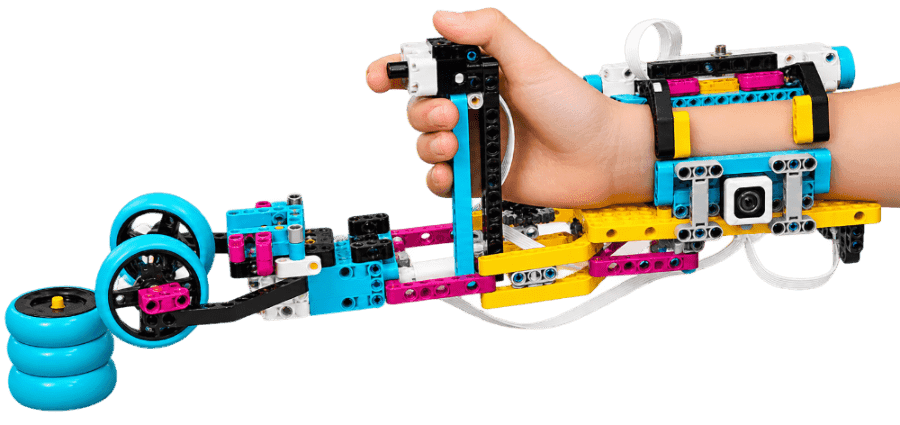
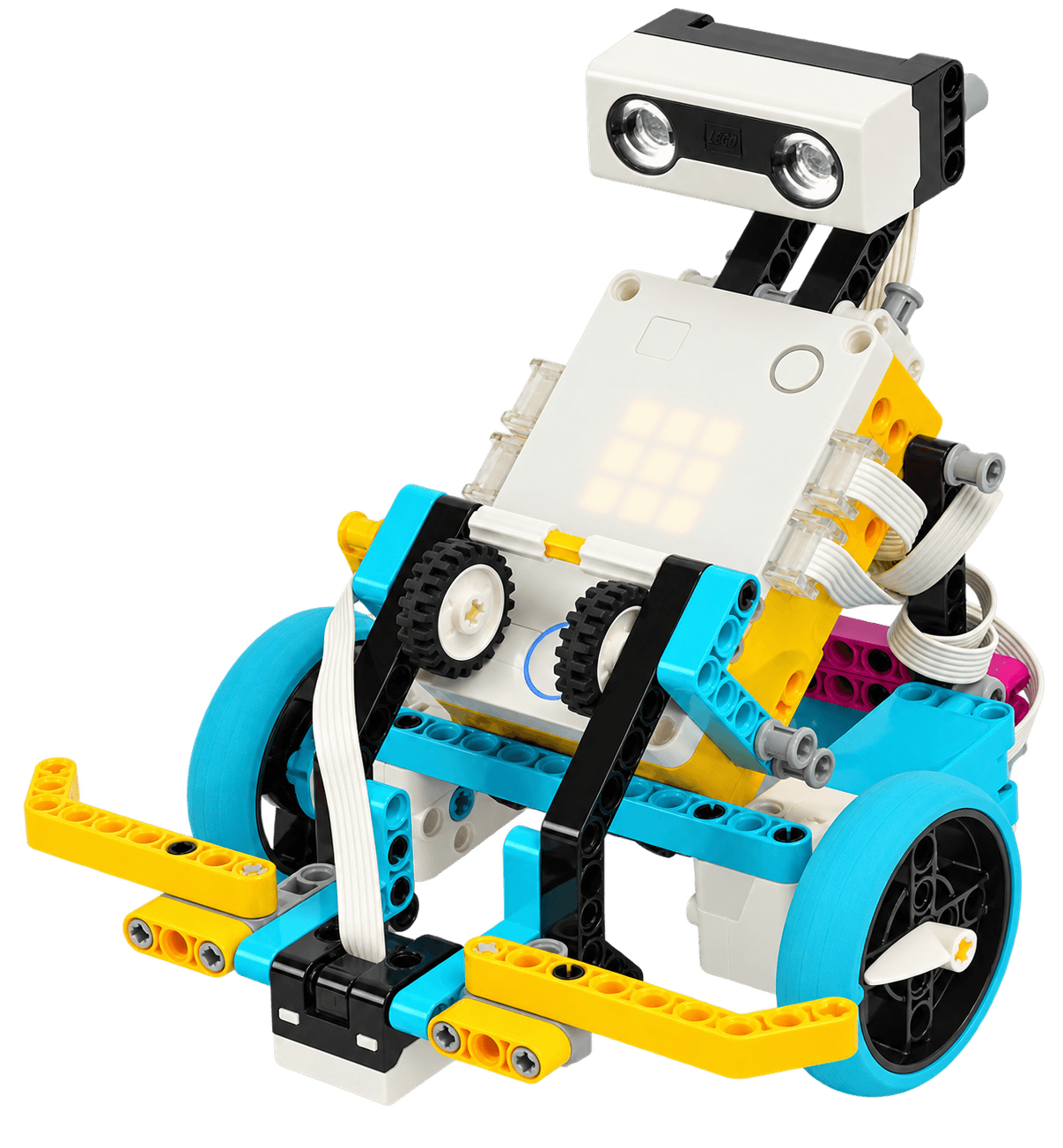
Robotics learning is built on LEGO Education SPIKE and connects mechanisms, logic and collaborative problem-solving.
LEGO Education SPIKE
Children begin with visual programming in Scratch and progress to Python as they mature.
Scratch first; Python as children are ready for deeper abstraction.
Introduced from age 7, AI is framed as a creative facilitator and counselor—not a replacement for a child's own thinking or creativity.
At 7, children design a cartoon hero, create its song and turn a hand-drawn sketch into a 3D character. At 12–13, they connect AI tools into workflows that build a real app, website or automation for a real-world problem.
Precision education
Every class is capped at four students with one or two teachers. Learning decisions come from ongoing formative assessment and observation rather than a fixed curriculum determined only by age.
The small-group structure lets teachers notice how each child approaches a task, responds to difficulty and develops over time.
Growth without ranking
Traditional competitions can shift attention toward comparison instead of individual growth. The academy does not use that framing.
Periodic Special Gatherings bring children together around a collaborative objective. Every participant receives a certificate and a small gift.Programs added regularly include
Learning in context
Field trips ground abstract classroom concepts in places where knowledge is applied, preserved, tested and created.
Academic leadership
The academy is led by two associate professors of computer engineering, one currently serving as a head of department, with 16 years of combined teaching and research experience.
What a child becomes
The goal reaches beyond a finished robot, artwork or program.
Faces unfamiliar problems by testing possibilities instead of waiting for an answer.
Faces unfamiliar problems by testing possibilities instead of waiting for an answer.
Develops the confidence to decide what to try next without waiting for instructions.
Believes an idea can move from imagination into something real.
Looks beyond the first workable answer and searches for a better solution.
Treats failure as information and is not afraid to try again.
Connects ideas across art, science, mathematics, design and technology.
What families observe
Before joining the program, my son would quickly ask for help whenever something didn't work. Now, he tries different solutions, tests his ideas, and keeps going until he finds a way to solve the problem.
What impressed us most was that the children aren't simply following instructions. They are encouraged to imagine, build, test, and redesign.
My daughter used to hesitate whenever she was asked to explain her ideas. After several months in the robotics program, she confidently presents her projects and explains how she solved problems.
The program taught our child that failure isn't the opposite of success. When a robot didn't work, he learned to ask ‘Why?’ and try again.
We love that robotics isn't taught as isolated programming. Our daughter uses mathematics, science, design, creativity, and technology together to solve real problems.
We initially enrolled our daughter because she was interested in robots. We stayed because we saw something much bigger developing: curiosity, persistence, creativity, teamwork, and confidence.
Explore a personalized STEAM learning path designed around your child's curiosity and goals.